

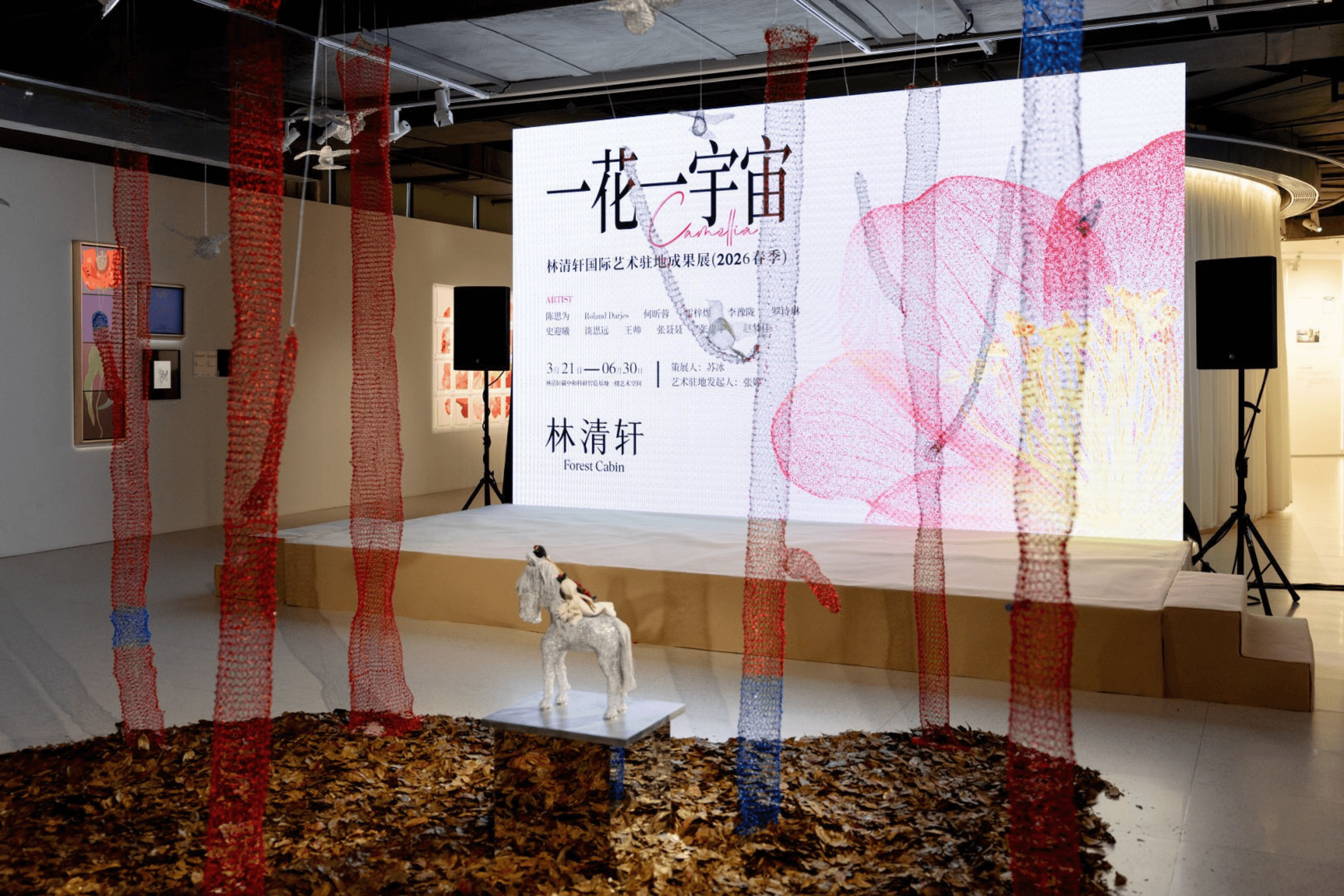
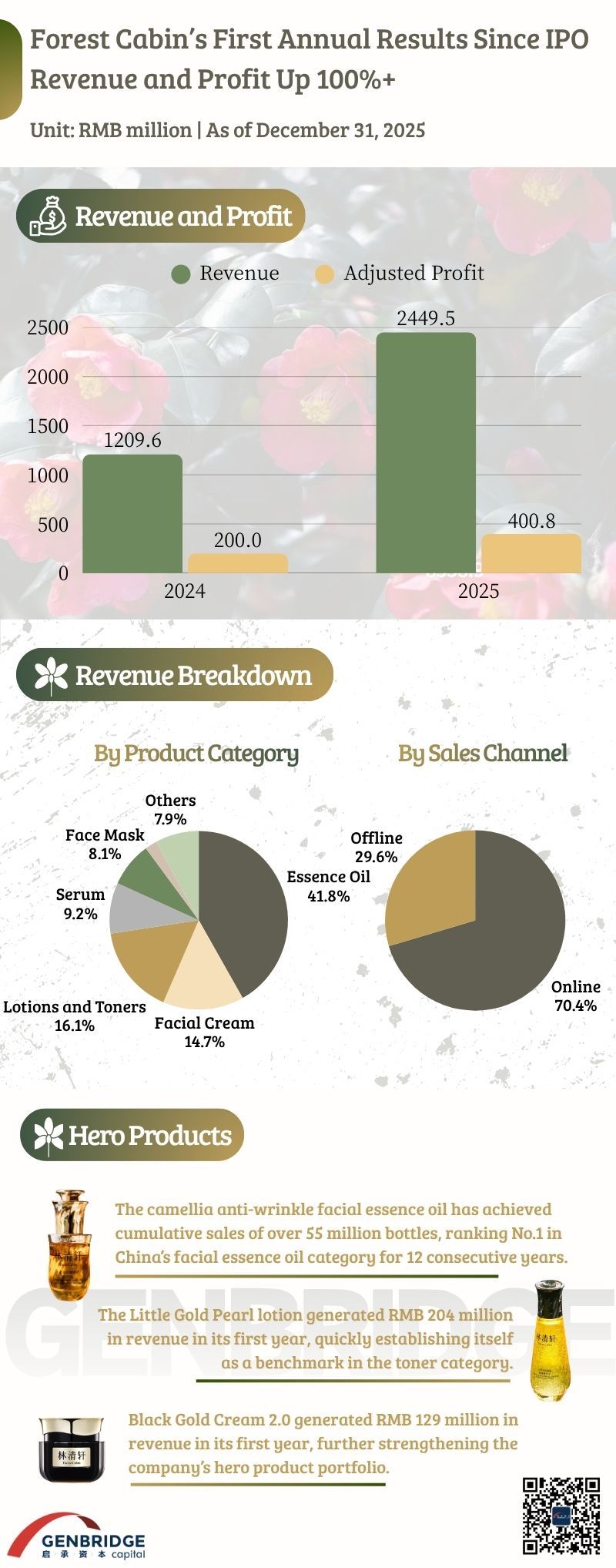
On March 24, Forest Cabin released its first earnings report since going public. The report shows that its full-year revenue reached RMB 2.45 billion, up 102.5% yoy; adjusted net profit was RMB 401 million, up 100.1% yoy, with gross margin exceeding 80% for three consecutive years.
At the end of 2025, Forest Cabin debuted on the Hong Kong Stock Exchange as the “first Chinese premium skincare stock,” and is the only domestic brand among China’s top 15 premium skincare brands (including international brands). Over the past year, Forest Cabin delivered an outstanding performance, achieving over 100% growth.
GenBridge Capital believes that behind this high growth lies Forest Cabin’s continuous insight into user needs, deep investment in product R&D and supply chain capabilities, active exploration of channel expansion, and long-term commitment to brand building. As a benchmark for China’s domestic skincare industry, we look forward to supporting Forest Cabin as it evolves from “China’s camellia” to “Forest Cabin of the world.”
Below are the key highlights from Forest Cabin’s earnings report:
Category: From hero product to 1+4+N
According to the annual report, camellia facial essence oil is Forest Cabin’s largest revenue contributor. In 2025, it generated RMB 1.024 billion in revenue, accounting for 41.8% of total sales. Since its launch in 2014, cumulative sales have exceeded 55 million bottles, ranking No.1 in China’s facial essence oil category for 12 consecutive years. Currently, the product holds a 25% online market share, and on Douyin, one out of every four bottles sold comes from Forest Cabin.
Beyond its core hero product, Forest Cabin’s new products have also demonstrated strong breakout potential.
The “Little Gold Pearl lotion” launched on July 13, 2025, became the No.1 product in the essence water category within five months, contributing RMB 204 million in revenue in its first year. In January 2025, the upgraded “Forest Cabin Black Gold Cream 2.0” was introduced, quickly becoming a bestseller and generating RMB 129 million in annual revenue.
At the earnings briefing, founder Laichun Sun stated that with camellia essence oil as the core hero product, Forest Cabin is building a “1+4+N” category matrix to achieve full-category synergy and full-scenario coverage—focusing on camellia essence oil as the No.1 strategic product; developing four pillar categories including creams, essence waters, sunscreen, and masks; and expanding N complementary products targeting specific user segments and scenarios.
Channels: Strengthen offline, scale online
In terms of channel strategy, Forest Cabin adopts a dual-engine approach of online and offline growth—strengthening offline presence while scaling online OMO channels to reach users across multiple touchpoints. Online focuses on hero products, while offline creates a “third space” for skincare experiences.
The report shows that in 2025, Forest Cabin’s offline revenue reached RMB 725 million, up 46.55% yoy. As of the end of 2025, the brand operated 580 stores nationwide, with over 95% located in shopping malls, and more than 60% in Tier 1 and Tier 2 cities.
Offline growth is driven by both network expansion and improved same-store performance. Founder Laichun Sun stated that “offline stores have strong profitability, with average store revenue exceeding RMB 2 million in top regions, and benchmark stores reaching RMB 5 million.” The company plans to open nearly 100 new stores annually, targeting a future network of 1,000–2,000 stores.
Forest Cabin emphasizes that strong offline presence is the foundation for scaling online. Online, it focuses on integrated “short video + livestream” marketing, with differentiated channel positioning: Douyin as the growth engine and brand amplifier; Tmall as the flagship brand and membership hub; JD as a gifting channel and male user supplement; WeChat Video Channels as a private traffic amplifier; and Xiaohongshu as a platform for building brand awareness.
Forest Cabin emphasizes that strong offline presence is the foundation for scaling online. Online, it focuses on integrated “short video + livestream” marketing, with differentiated channel positioning: Douyin as the growth engine and brand amplifier; Tmall as the flagship brand and membership hub; JD as a gifting channel and male user supplement; WeChat Video Channels as a private traffic amplifier; and Xiaohongshu as a platform for building brand awareness.
R&D: User-centric, replicable, and fast iteration
The report shows that from 2023 to 2025, Forest Cabin’s R&D investment has increased year by year, with growth exceeding 50% in the past two years.
In 2025, Forest Cabin’s R&D expenditure reached RMB 46.77 million. The company has actively built a PLM R&D platform, introduced AI technologies and young talent, and established a postdoctoral workstation in Songjiang. It currently employs 139 R&D professionals across botany, biology, dermatology, and applied chemistry, with over 55% holding master’s degrees or above.
Meanwhile, Forest Cabin continues to optimize its organizational structure, transitioning from a vertical management system to a matrix model. It has formed cross-functional project teams centered around flagship products, spanning research, product development, production, sales, marketing, and after-sales, enhancing cross-department collaboration and market responsiveness.
The “Little Gold Pearl lotion” which became a bestseller upon launch in 2025, represents a successful replication of the camellia essence oil development experience. It pioneered camellia oil micro-bead technology, creating an innovative benchmark product in the domestic essence water category.
Forest Cabin is committed to building a full-chain R&D platform, integrating everything from raw material selection to final formulation. Laichun Sun noted that product development and iteration require long cycles, and the company is advancing steadily under a “one generation applied, one generation in development, one generation in reserve” framework.
Strategy: Premiumization, multi-brand, globalization
At the earnings briefing, Laichun Sun stated that the current period represents a historic window for the rise of domestic brands replacing international ones, with skincare still in the early stages of this trend. As a key player in this shift, Forest Cabin aims to reach RMB 10 billion in revenue within five years and has defined its strategy: premiumization, multi-brand, and globalization.
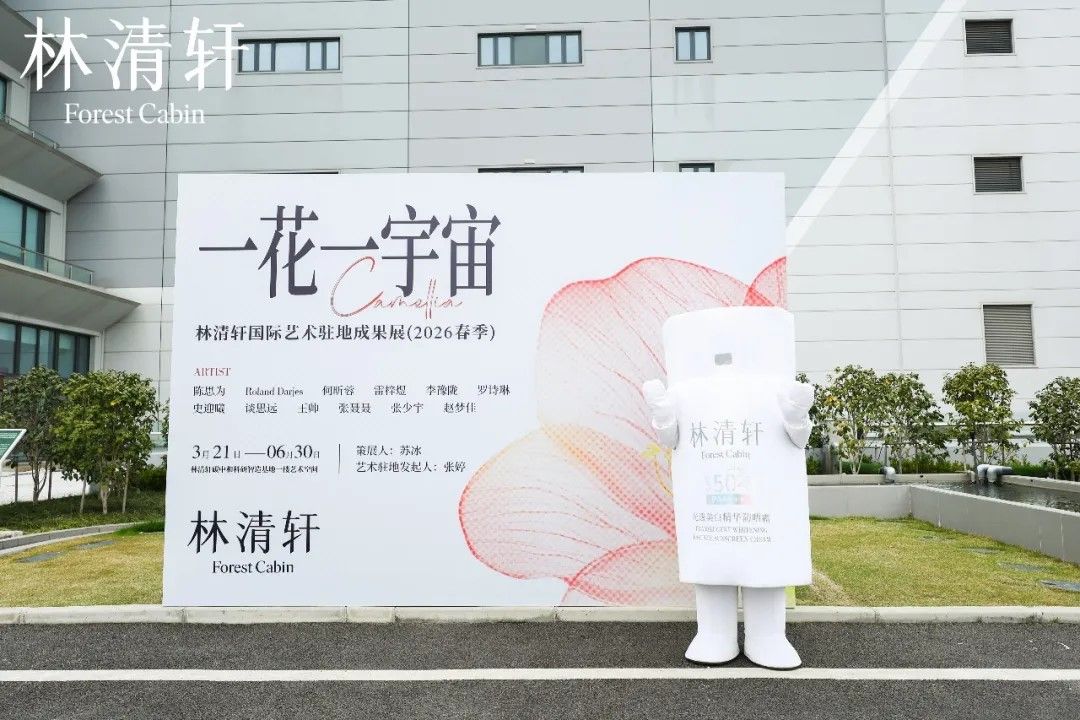
Premiumization refers to continuously launching high-impact flagship products to break the stereotype of domestic brands as “low-cost substitutes.” Through investment in R&D, strict quality control, and a focus on mid-to-high-end consumption scenarios, the brand aims to elevate its value toward technological and cultural dimensions. To date, Forest Cabin has hosted four Camellia Art Festivals, collaborating with multiple artists and institutions such as the Suzhou Museum to release limited-edition collections, strengthening the association between the camellia symbol and the brand in consumers’ minds.
Multi-brand strategy involves strengthening the core leadership of the main brand while building sub-brands focused on niche segments through internal incubation and external acquisitions, gradually transitioning from product-driven growth to a multi-brand ecosystem.
Globalization emphasizes “brand going global” rather than simply exporting production capacity, adopting a “small steps, precise expansion” approach. The company is currently expanding in Hong Kong and Southeast Asia, gradually entering global markets.
Laichun Sun stated that Forest Cabin’s mission is to “decode the secret of radiant skin,” aiming to redefine the essence of beauty—regardless of height, body shape, or appearance, radiance is beauty. “A person who shines not only lights up themselves, but also illuminates the world.”
We believe that a brand that shines can also bring a measure of beauty to the world.